Four Principles of Product Thinking
1. User-centred design
Before designing any H5 feature, understand users’ motivations and obstacles, map their real path through the experience, and ask a simple question: do they truly need it?
Interactive-media projects often add unnecessary clicks for the sake of interactivity. Redundant interactions increase friction rather than engagement, especially for audiences with limited patience. Motion should make a story easier to consume, not make users work harder to access it.
Effective example
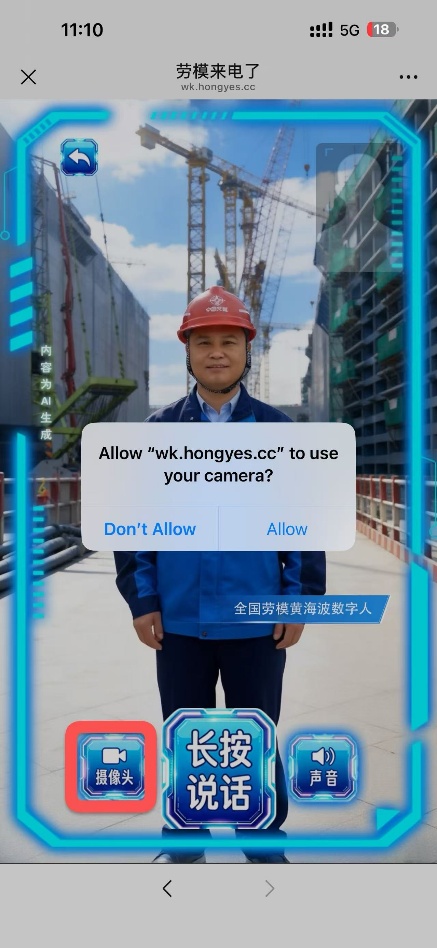
Ineffective example

2. Data-informed decisions
Product decisions should not rest on instinct or personal preference. Whether a feature is worth making should be tested against outcomes such as conversion, retention and click-through rate.
News products are frequently published once and used once, which makes instrumentation, comparison and iteration difficult. Editorial organisations also often lack clear operational roles and the time needed to collect, analyse and review data.
3. Rapid iteration
The one-off nature of news means an interactive story cannot simply launch imperfectly and be refined through market feedback. This makes rigorous pre-launch judgement essential: teams need to anticipate which decisions will create value before publication.
4. Outcomes over effort
Product thinking values measurable impact over visible effort. A format should earn its complexity: if text and images can communicate a story equally well, a costly H5 experience is not a good use of resources.
Effective example

Ineffective example

An End-to-End Product Process
Product idea. Shift the question from “What do we want to show?” to “What does the user need?” A strong H5 concept sits at the intersection of news value and audience resonance.
Market analysis. Review comparable work from leading publishers, then identify a differentiated opportunity through interaction patterns, visual language and performance data.
Needs analysis. A project must offer audiences a clear benefit: emotional resonance, practical utility or a compelling reason to participate. Define a specific audience instead of trying to satisfy everyone.
Product design. Build a prototype before visual UI work. Map entry points, each action and the sharing flow so the interaction logic is coherent.
Interaction-flow examples



Project review. Editorial, design and technical colleagues should jointly test whether visual effects can be delivered smoothly on mobile, identifying technical risk before launch.
UI design. UI is not only decorative; it guides action. Colour, type scale and button placement should follow mobile conventions and support intuitive use.
Development. Build for device compatibility and run focused pre-launch stress tests and bug reviews.
Launch. Verify load time, share-card generation and analytics instrumentation in the production environment.
Operations. Analyse drop-off points, click-through rate and the relationship between sharing and opens. These are objective measures of a project’s performance.
Iteration. Even when a published story cannot be extensively changed, its lessons can be converted into a practical checklist for the next production cycle.
Technology, Cost and Return
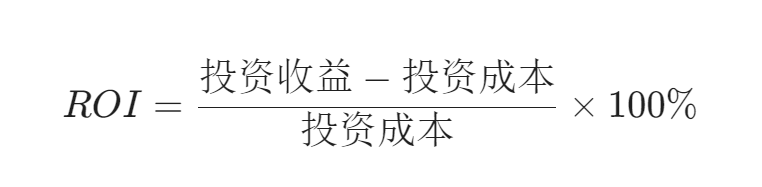
Technology is a means, not an end. The upper limit of what a project can do is defined by the available technology; its lower limit should be what users actually need. The appropriate investment lies between those boundaries and depends on return on investment.
During needs analysis, evaluate production cost, audience time and attention, delivery risk and expected benefit. Benefits can include measurable reach, conversion and retention, as well as social impact or recognition.
If an H5 experience is expensive to build but does not outperform a simple article in engagement or retention, its ROI is low. The strongest interactive-media work pairs a meaningful user motivation with a satisfying interaction and a clear mechanism for sharing.